
Damara On the Rural Block, the Smallholding or the Homestead
For smaller farms, homestead, and acreage holders, choosing the right breed is less about chasing extremes and more about finding balance. The sheep need to be capable, but they also need to fit the rhythm of the property — the land available, the time you have, and the way you prefer to work. In many cases, the lines between livestock and pets become less obvious. In that setting, practicality, steadiness, and versatility matter far more than simply novelty. Damara sheep meet that niche.
On a smaller scale, like a hobby farm or small acreage, every animal counts. Temperament, mothering ability, and ease of handling aren’t just good production traits — they can shape the day-to-day rhythm of the farm. Damara are alert without being flighty, intelligent without being difficult (except of course our ewe Scout, there is always one!), and they respond well to consistent interaction. Over time, they recognise routine and they recognise people. They learn the shape of the property and the flow of it. On a family farm or compact acreage, that matters. Sheep are not just numbers; they are seen daily, interacted with daily, moved thoughtfully, and worked quietly. Damaras tend to meet that approach with pleasure. They come when called, know a feed bucket and will enjoy following you on walks. Of course, as with all livestock, the level of engagement will depend on how much you give as well – but the Damara will meet you where you want to be. There is real enjoyment in working alongside a breed that is both capable and engaged.
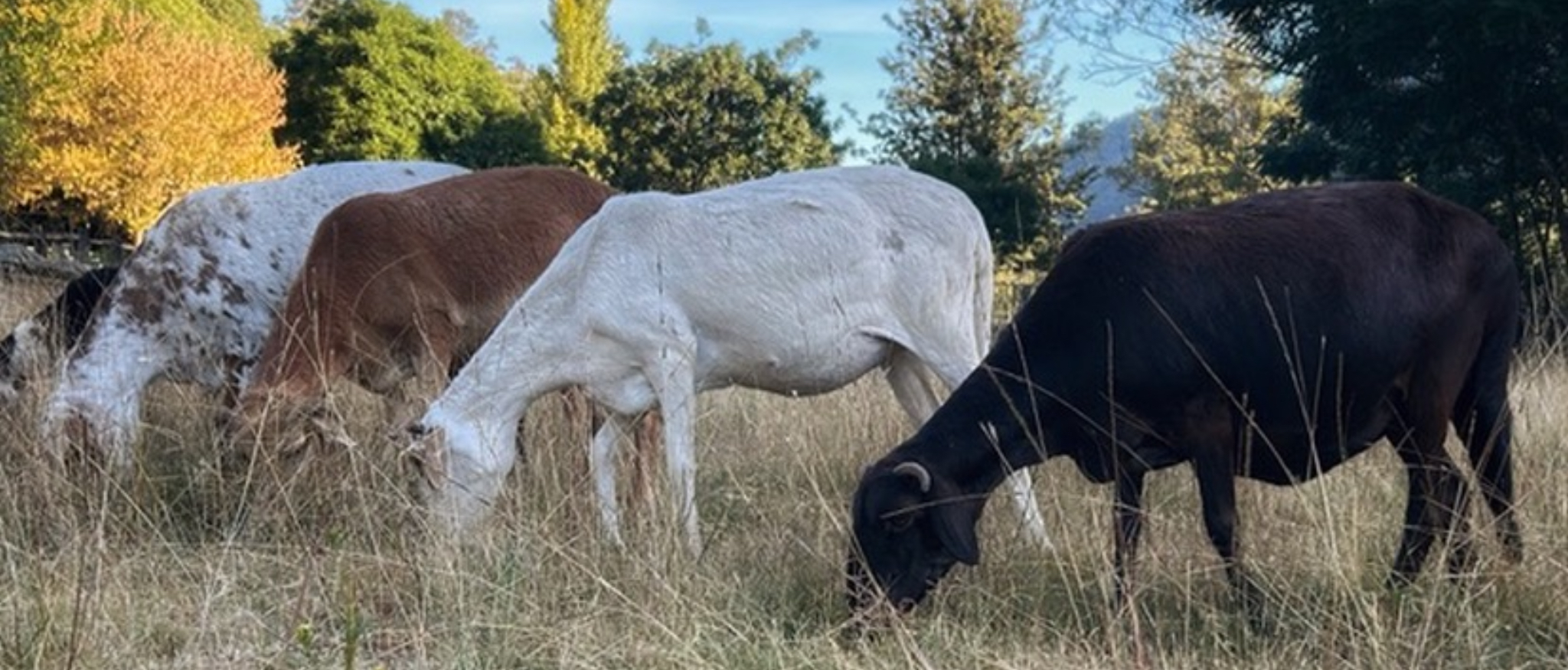
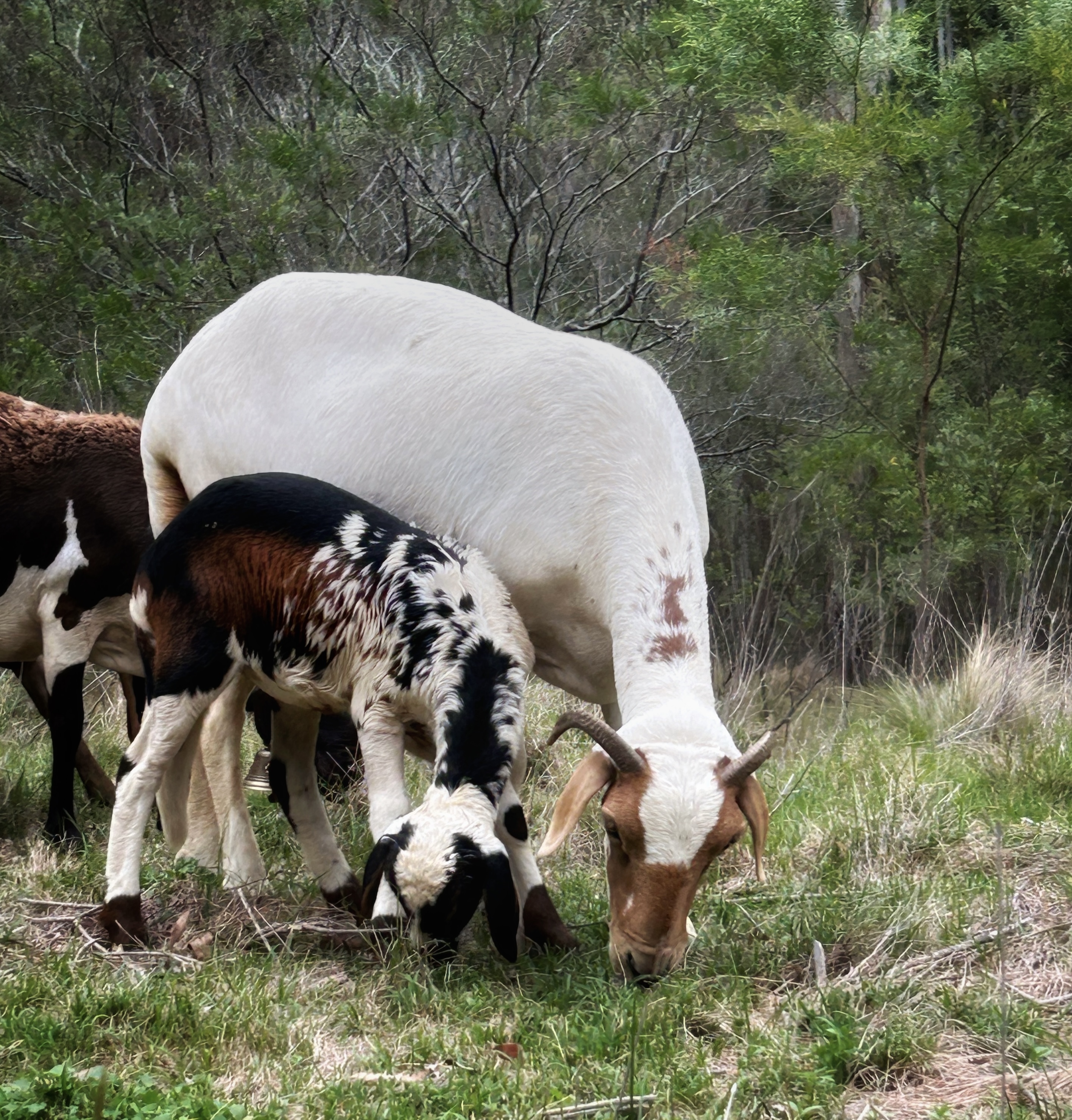
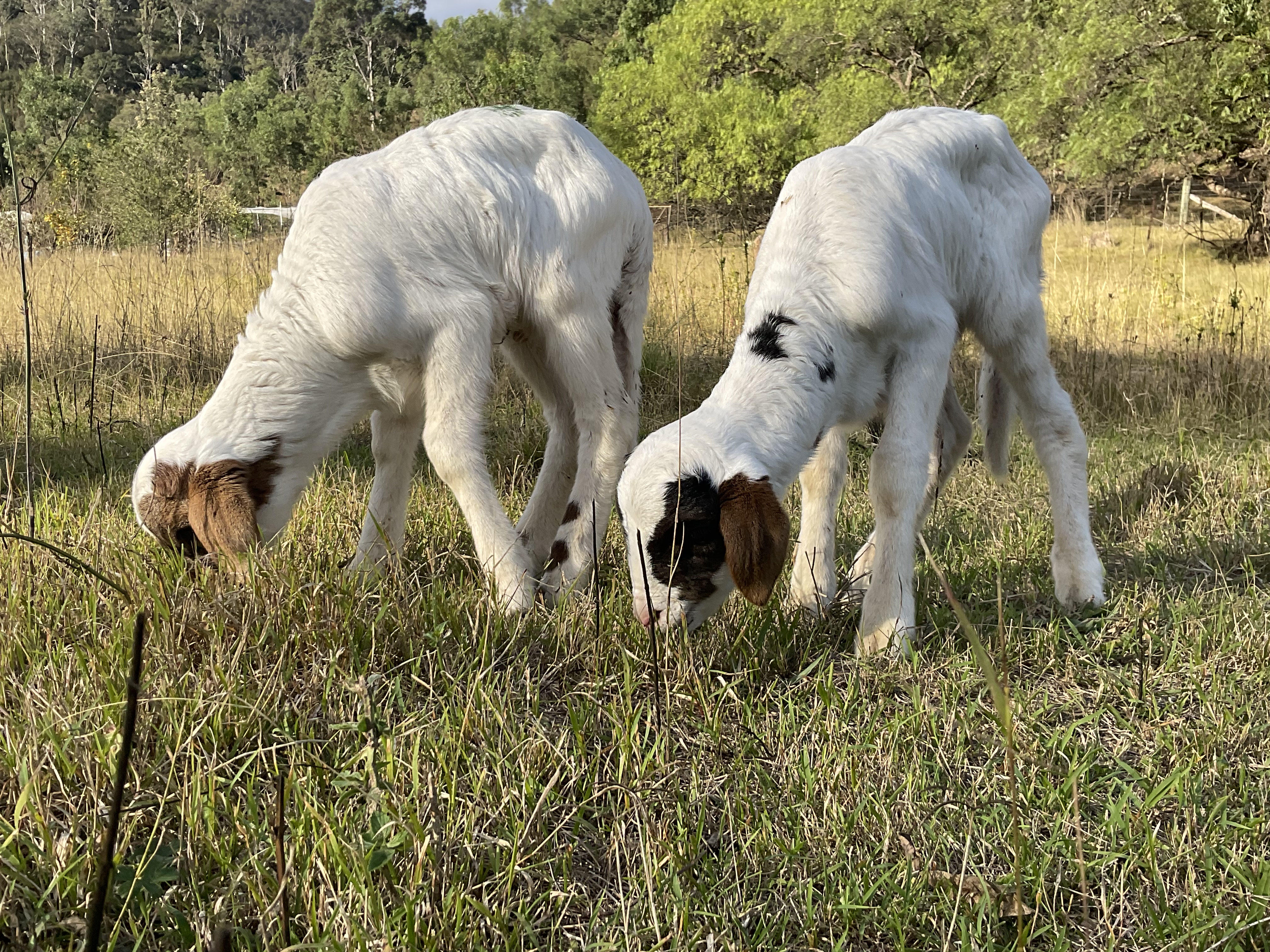
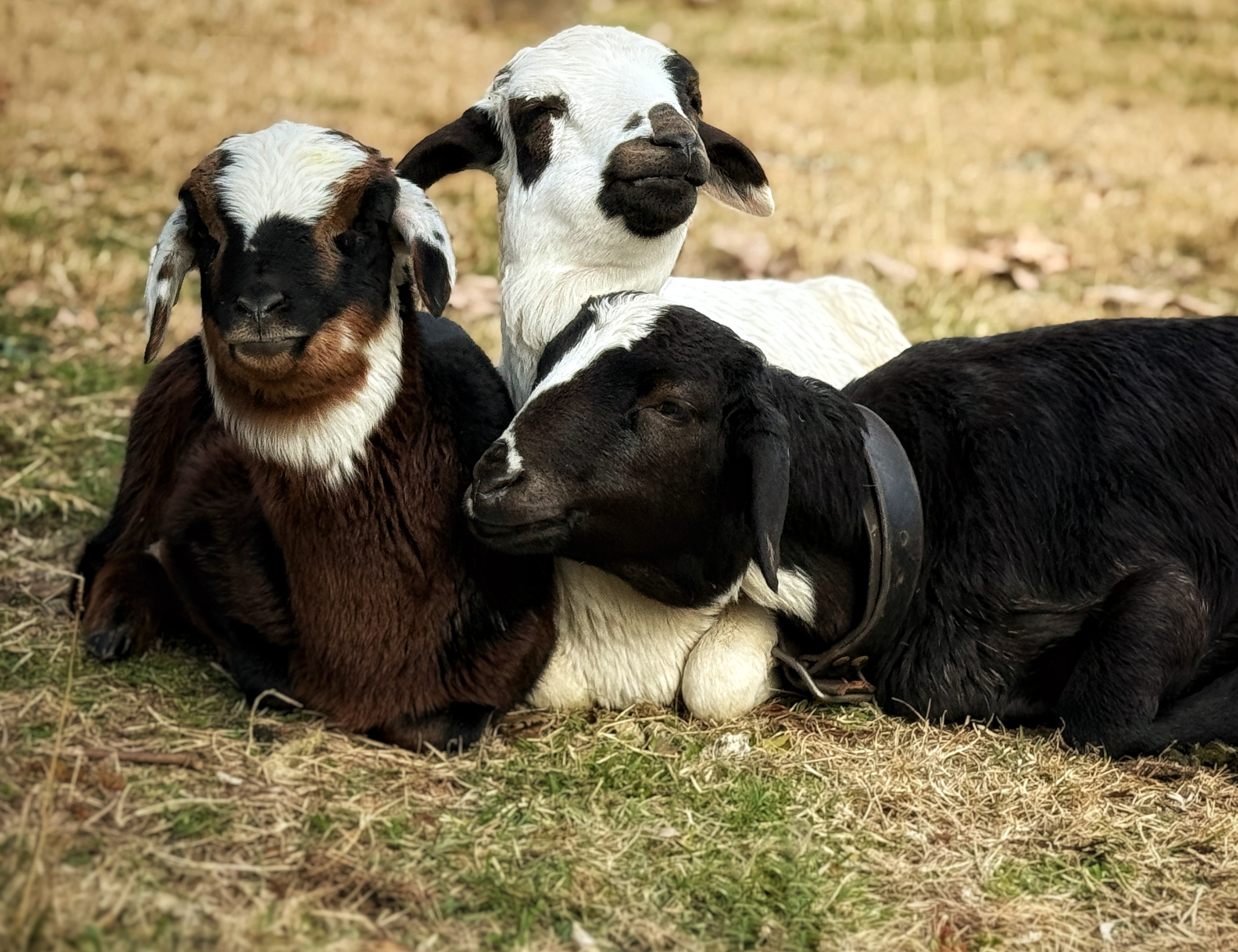
There is also the simple matter of how they look. Damaras are striking sheep. Their long, wedge-shaped tails, long ears and fine legs and alert nature gives them a presence that stands apart from conventional wool breeds. The variation in their hides — browns, blacks and whites adds further interest across the paddock. A group of Damaras moving together has a certain elegance; they look purposeful and distinctly their own. They can be a real feature on the farm, and a beautiful addition.
They are also, quite simply, a genuinely multi-purpose animal. On smaller properties where finances matter, adaptability and versatility carries the same weight as large scale operations. Damaras are active browsers as well as grazers, helping to keep weeds in check and tidy up paddocks ahead of other stock – check our section on their use in rotational grazing systems below. They do not demand improved or specialised pasture, but will thrive on such, allowing them to slot into mixed systems with relative ease and contribute by serving as a clean up crew for other stock. For those inclined toward self-sufficiency, they produce lean, high-quality meat, and their natural fat distribution can make processing more straightforward than with heavily finished breeds, and their hides are distinctive and useful.
For many smaller farms and homesteads, livestock are part of a broader, self-reliant system. Production, stewardship, daily care and real companionship sit side by side. Damaras fit comfortably within that balance — where sheep are known rather than numbered.
The case for Damara over Goats in Multi Species and Rotational Grazing Systems
Rotational grazing is one of the oldest management strategies around. The principle is simple: move animals through a series of paddocks on a schedule that allows adequate rest and regrowth before return. Done well, it builds ground cover, reduces weed pressure, improves water infiltration, and — critically — breaks parasite cycles. That occurs due to parasite die-off over certain time periods (sometimes close to a year) or by means of using different species in succession due to the host specific nature of many parasites.
The appeal of goats in a rotational system is relatively obvious. They browse – not just graze, but consume weeds, trees and poor grasses, convert that feed efficiently, and handle dry conditions well. On unimproved or scrubby paddocks, they’ll work through vegetation that most sheep ignore. Alongside our Damara flock we also keep goats – a small milking herd of Brittish Alpines, and we adore them — they have a lot of personality and they are productive. Because we run them alongside Damara, we see the management differences up close – and goat management issues are going to be well known to those who keep them.
Fencing is the first problem. Goats require exclusion or inclusion fencing — tight, well-maintained, often electric. Once you are sure your paddocks are secure, your goats will show you they are not. Once you have fixed that problem and have things secure, your coats will show you that they are not. A genuinely goat-proof fence is a significant commitment, both time and effort and it doesn’t stay goat-proof without ongoing attention. Damara, on the other hand, respect fencing (not only more than goats, but also more than some other notorious escape artist sheep breeds) and work within conventional sheep fencing. On a property where that cost is yet to be outlaid, or goat fence upgrades are extensive, or you just dont have the time – that difference alone can be a huge advantage.
The parasite picture is the second consideration, and a more consequential one. Goats are highly susceptible to barber’s pole worm — more so than most sheep breeds. On spacious, well-managed paddocks with low background contamination, this can be handled. In heavier contaminated areas, smaller acreages, high rainfall or warm zones, this is a serious challenge. Unfortunately, the goat’s well-earned reputation for hardiness does not extend to Haemonchus contortus. Damara on the same country carry a different risk profile. Their natural resistance to internal parasites – that being the capacity to maintain condition and production under moderate worm pressure is well documented. This matters practically because rotational systems are rarely executed perfectly. A delayed move, an untimely wet period, the need to repopulate early — these are normal realities.
Additionally, drench resistance in Australia is a reality and frequent drenching is not only a primary contributor to this issue, but also a financially costly one and perhaps even an unavailable one if operating organically. A species or breed with low resilience pays for every deviation, whereas the Damara carries a buffer. We strongly recommend a visit to The Worm Boss site for excellent management advice for both species.
Damara also offer the best of both worlds when it comes to feeding behavior. Damara are browsers as much as grazers, up to 64% of their diet is browsing material – yes, that includes all those weeds that goats love, and even some others. They work through forbs, browse shrubs, trees, weeds and grass that predominant grazers walk past, and they cover distance enthusiastically. Paddocks come out of a grazing round more evenly utilised, more like a goat than sheep – but without the fence pressure or heavier parasite load/drench input requirement. This means they can also act as a “clean-up crew” to tackle problems before cattle, horses or other livestock.
None of this is aimed as a criticism of goats – we will always have ours, and we have yet to receive any milk, yoghurt and cheese from our ewes! However for those looking to run a browsing animal within a rotational system with conventional fencing, a realistic contamination baseline or a preference for low input systems we believe Damara are ahead at almost every point.
Like to know even more about the breed? Have a look at the About The Damara sections, or head to Information for New Shepherds for a quick introduction to sheep husbandry.

